

Building Functional Strength at Any Age
Building Functional Strength at Any Age: A Guide for Underground Gym Members
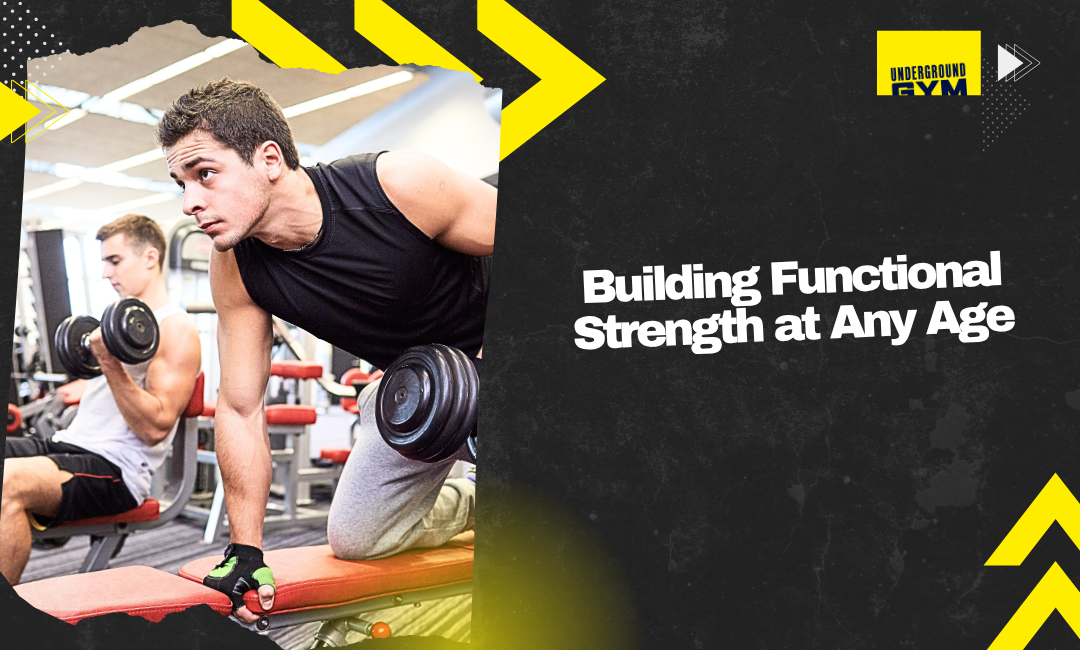
When a new member walks through our doors at Underground Gym, one of the first questions I ask is simple but revealing: "What do you want your strength to do for you?"
The answers vary widely—from "keep up with my grandchildren" to "improve my tennis game" to "carry my shopping without pain." Yet they all point to the same fundamental desire: functional strength that translates to real life.
In my years as a coach, I've noticed a shift in how people think about fitness. More and more members are less concerned with how much they bench press and more interested in how their training improves their daily lives. This focus on functional capability rather than arbitrary numbers is something we've championed at Underground Gym since day one.
Today, I want to explore what truly makes strength "functional," how we develop it at any age, and why it matters more than most people realise.
What Makes Strength "Functional"?
The term "functional training" has been misused and misunderstood in the fitness industry for years. No, it doesn't mean standing on a BOSU ball while doing bicep curls. True functional strength has specific characteristics:
- It transfers to real-world activities - Functional strength improves your capability in daily tasks and recreational activities. If your gym strength doesn't help you move furniture, play with your children, or excel in your chosen sport, it's not truly functional.
- It works in multiple planes of movement - Life doesn't happen in just one dimension. Functional training develops strength in all planes: sagittal (forward/backward), frontal (side to side), and transverse (rotational).
- It balances stability and mobility - Functional strength requires not just the ability to produce force but to control it through ranges of motion while maintaining position.
- It connects the whole body - Rather than isolating muscles, functional training emphasises how your body works as an integrated system. The strength of this connection is often more important than the strength of individual parts.
Mark, a 57-year-old member at our Brighton location, put it perfectly: "I spent years doing bodybuilding-style training and looked strong, but I'd still throw my back out picking up a suitcase. Six months of functional training changed that completely."
Assessing Your Current Functional Capability
Before diving into training specifics, it's valuable to understand your starting point. Here are simple self-assessments you can try:
- The Get-Up Test - Can you get up from the floor to standing without using your arms? This compound movement reveals much about your overall functional capacity.
- Carry Challenge - How far can you carry approximately 25% of your body weight in each hand before needing to set it down? This tests not just strength but endurance and stability.
- Rotational Reach - Standing with feet shoulder width apart, how far can you rotate and reach in each direction while maintaining your hips position? This reveals torso mobility and stability.
- Single-Leg Balance - Can you stand on one leg for 30 seconds with eyes open? With eyes closed? Balance is a fundamental component of functional movement.
These simple tests often reveal surprising gaps in functional capability. I've worked with members who could deadlift impressive weight yet struggled to perform basic movement patterns without load—a clear sign that their "strength" wasn't fully functional.
When members first join Underground Gym, our coaches perform a more comprehensive movement assessment that helps identify specific areas to address. This becomes the foundation for their training programme.
Key Functional Movement Patterns
Rather than thinking about muscles in isolation, functional training focuses on movement patterns. Here are the fundamental patterns we develop with all our members:
1. Hinge Movements: Protecting Your Back for Life
The hip hinge—bending from the hips while maintaining a neutral spine—is perhaps the most important movement pattern for both power and injury prevention.
Many back injuries occur because people bend from their spine rather than their hips. Learning proper hinging translates directly to safer, stronger movement in countless daily activities from picking up children to gardening.
Progression Path:
- Assisted hip hinge with dowel rod feedback
- Romanian deadlift with light load
- Conventional deadlift
- Single-leg deadlift variations
Coaching Cue I Use: "Push your hips back as if closing a door behind you with your bum."
2. Squat Patterns: Lower Body Power and Mobility
The ability to slowly lower your body by bending at the hips, knees and ankles is fundamental to human movement. From sitting in a chair to using the toilet, squatting movements are unavoidable in daily life.
Proper squatting requires adequate ankle, hip, and thoracic spine mobility along with core stability—elements we assess and develop systematically.
Progression Path:
- Assisted squat with counterbalance
- Goblet squat
- Front-loaded squat variations
- Rear-loaded squat variations
Coaching Cue I Use: "Imagine spreading the floor apart with your feet as you descend."
3. Push Movements: Upper Body Strength and Shoulder Health
Push movements—both horizontal (pushing a door) and vertical (reaching overhead)—require coordinated action from multiple joints and muscle groups.
Functional pushing strength balances the chest, shoulders, and triceps while maintaining scapular stability—crucial for shoulder health as we age.
Progression Path:
- Wall push
- Incline push up
- Standard push up
- Overhead pressing movements
Coaching Cue I Use: "Create tension through your entire body, not just the pushing muscles."
4. Pull Movements: Back Strength and Posture
Pulling strength is often underdeveloped yet critical for posture, shoulder health, and daily activities like opening heavy doors or pulling a suitcase.
In our increasingly forward-focused world (driving, computers, phones), developing posterior chain strength through pulling movements becomes even more important.
Progression Path:
- Resistance band pulls
- Supported rows
- Unsupported rows
- Pull-up progressions
Coaching Cue I Use: "Initiate the movement by driving your elbows behind you, not just with your hands."
5. Carry Movements: Real-World Strength Expression
Carrying external loads—shopping bags, children, luggage—is perhaps the most direct expression of functional strength in daily life.
Various carrying positions (symmetrical, asymmetrical, overhead) challenge different aspects of stability and strength, making them invaluable training tools.
Progression Path:
- Farmer's carries
- Suitcase carries (asymmetrical)
- Overhead carries
- Complex carrying patterns
Coaching Cue I Use: "Create full-body tension as if you're turning your torso into a solid pillar."
6. Rotation and Anti-Rotation: Core Function Beyond Sit-Ups
Rotational movements power everything from sports to daily tasks like reaching into the back seat of your car. Equally important is anti-rotation—resisting unwanted rotational forces to protect your spine.
Progression Path:
- Anti-rotation holds with resistance band
- Controlled rotational movements
- Dynamic rotational exercises
- Rotational power development
Coaching Cue I Use: "Move from your midsection, not just your arms."
Age-Specific Considerations for Functional Training
While the fundamental patterns remain the same, how we approach them varies significantly based on age and training history:
Teens and 20s: Building the Foundation
For younger members, we emphasise:
- Movement quality before load
- Neuromuscular development through varied patterns
- Balanced development to prevent future imbalances
- Education about proper progression principles
Jamie (19) came to us primarily interested in building muscle, but quickly appreciated our approach: "Learning to move properly first has made everything else easier. I'm actually lifting heavier than my friends who jumped straight into 'bro splits' because my technique is better."
30s and 40s: Countering Occupational Patterns
For members in this age range, we focus on:
- Addressing postural issues from sedentary work
- Developing resilience against stress-induced patterns
- Efficient training methods that accommodate busy schedules
- Balanced programming to counteract sport-specific imbalances
Helen (42), who works in finance and sits at a desk all day, noticed significant changes: "The focus on pulling exercises and proper breathing has completely eliminated my neck pain. I stand taller and my clothes fit differently, even though I haven't lost weight."
50s, 60s and Beyond: Maintaining Independence
For our older members, priorities shift to:
- Preserving muscle mass (particularly important after 50)
- Maintaining a full range of motion
- Balance and fall prevention
- Specific focus on movement patterns essential for independence
Richard (67) started training with us after retirement: "I wish I'd started earlier, but the improvements in the last year have been remarkable. I can play with my grandchildren on the floor and get back up without thinking about it. That's worth more than any weight lifted."
The Science Behind Functional Strength Training

Understanding why functional strength matters becomes clearer when we examine the research:
- Muscle Mass and Ageing: After age 30, we lose approximately 3-8% of muscle mass per decade. This loss accelerates after 50, making strength training crucial for maintaining independence.
- Bone Density Benefits: Strength training that targets major muscle groups helps improve bone density, particularly important for postmenopausal women facing hormonal changes that affect bone health.
- Central Nervous System Adaptation: Functional exercises that challenge multiple muscle groups simultaneously improve neural coordination and athletic performance more effectively than isolated movements.
- Joint Health: Exercises that move joints through their full range of motion help maintain mobility and reduce joint pain, particularly when combined with proper warm-up protocols.
Advanced Functional Training Techniques
Once you've mastered the fundamentals, we progress into more advanced functional training methods:
Compound Movement Mastery
- Bodyweight Squat Variations: Starting from feet hip width apart, slowly lower into a squat with knees bent, then slowly return to the starting position. Progress to single-leg variations where the working leg supports the entire body.
- Single-Arm Challenges: Performing exercises with one arm while maintaining stability challenges the core and improves bilateral coordination.
- Unilateral Training: Working one leg at a time—whether the left leg or the right leg—helps identify and correct imbalances while improving overall stability.
Load Progression Strategies
- Heavy Loads Integration: Gradually introducing heavy dumbbells and challenging weights to build muscle strength and power.
- Functional Exercises Combinations: Combining movements that target the anterior deltoids, shoulders, and other key muscle groups in sequence.
- Athletic Performance Focus: Training that enhances overall physical performance through compound movements that challenge the entire body.
Sean, who trains at our Tunbridge Wells location, noticed the difference when playing rugby: "The combination of odd object training and asymmetrical carries translated directly to the pitch. I'm much harder to knock off the ball, even by bigger players."
Functional Training Options at Underground Gym
We offer various ways to develop functional strength across our three locations:
Brighton
- UG Strength classes focus on fundamental movement patterns and progressive loading
- Relentless combines functional strength with metabolic conditioning
- UG Callisthenics develops bodyweight mastery and movement control
Newhaven
- Strength Circuits emphasises functional movement patterns with systematic progression
- UG Functional Fit classes combine strength elements with conditioning
- UG Metcon integrates functional movements with metabolic conditioning
Tunbridge Wells
- UG Strength provides coached sessions focusing on movement mastery
- Fitnabel Strength offers female-focused functional strength development
- Olympic Lifting develops explosive power and mobility
Equipment That Enhances Functional Training
Beyond barbells and dumbbells, we specifically provide equipment that enhances functional strength development:
- Kettlebells for dynamic, ballistic training
- Sandbags and odd objects for real-world strength challenges
- Suspension trainers for bodyweight mastery
- Resistance bands for variable resistance patterns
- Medicine balls for rotational power development
Injury Prevention Through Functional Training
One of the most significant benefits of functional strength training is its ability to reduce injury risk:
- Movement Quality: Proper movement patterns reduce compensation patterns that lead to overuse injuries.
- Muscle Repair: Functional exercises promote better muscle repair and recovery compared to isolated training.
- Joint Stability: Training that emphasises stability reduces the risk of acute injuries during daily activities.
- Balance Enhancement: Improved balance significantly reduces fall risk, particularly important as we age.
Special Considerations for Different Populations
Postmenopausal Women
Hormonal changes affect bone density and muscle mass retention. Our approach emphasises:
- Strength exercises that promote bone health
- Balance training to reduce fall risk
- Resistance training to maintain muscle mass
Home Workouts Integration
For members who supplement gym training with home workouts, we provide:
- Bodyweight progressions that require minimal equipment
- Movement patterns that can be performed in a limited space
- Guidance on maintaining form without direct supervision
Measuring Progress in Functional Strength
Unlike traditional strength training, where progress is measured simply by weight on the bar, functional strength improvements can be tracked through:
- Movement Quality Assessments: Using video analysis to assess movement pattern quality and consistency.
- Real-World Capability Tests: Practical assessments like carrying weight for distance or time.
- Daily Life Feedback: Often the most meaningful: "I can now keep up with my children all day without fatigue", or "I completed my garden project without back pain."
- Performance Metrics: Improvements in your golf game, tennis serve, or hiking ability.
At Underground Gym, we track these elements systematically through our member progress system, allowing us to show concrete improvements even when they're not just about adding weight.
Technical Exercise Breakdown
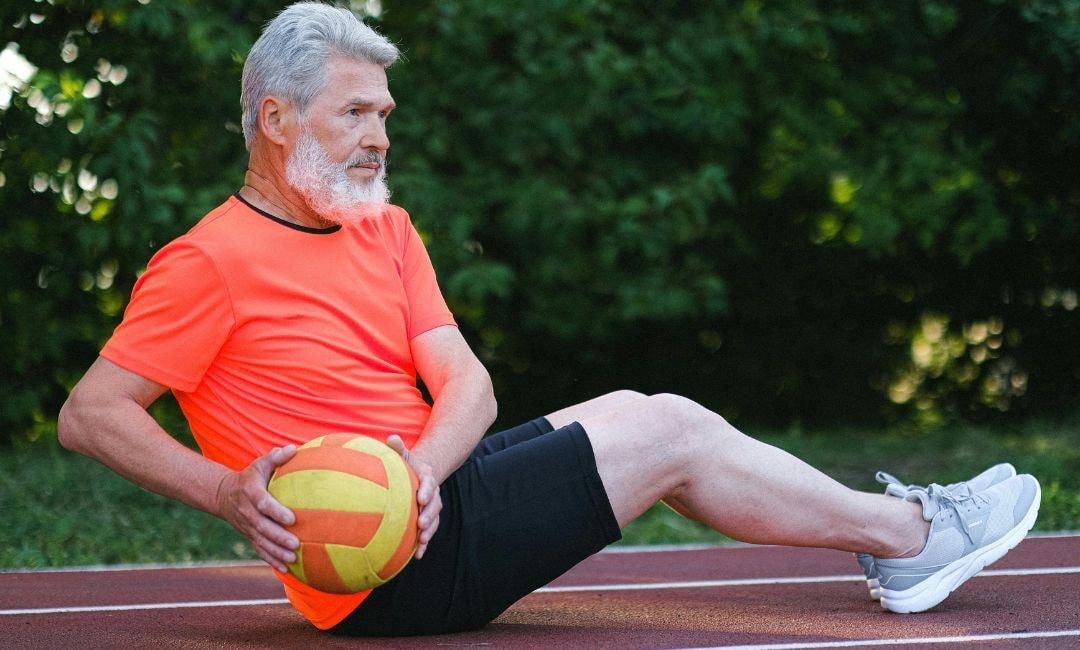
Proper Form Guidelines
- Feet Positioning: Whether feet hip width apart or width apart at shoulder distance, proper base of support is crucial for all movements.
- Knee Alignment: Maintaining proper alignment of the right knee and left knee during single-leg exercises prevents injury and maximises effectiveness.
- Head Position: Maintaining neutral head position throughout movements supports proper spinal alignment.
- Range of Motion: Moving through the full range of motion while maintaining control enhances both mobility and strength gains.
Progressive Loading Strategies
- Starting Light: Begin with bodyweight or light resistance before progressing to heavy loads.
- Unilateral Focus: Progress from bilateral movements to single-leg or one-arm variations.
- Foot Placement: Mastering proper left foot and right foot placement during various movement patterns.
- Stability Challenges: Gradually introducing unstable surfaces or asymmetrical loads.
Getting Started with Functional Training
No matter your age or starting point, here's how to begin developing truly functional strength:
- Book an assessment with one of our coaches to identify your specific needs
- Start with movement mastery before focusing on load
- Incorporate all fundamental patterns in your weekly training
- Progress systematically based on quality, not just weight lifted
- Apply your strength in activities outside the gym
We recommend starting with our foundation classes:
- UG Strength (all locations)
- Strength Circuits (Newhaven)
- Fitnabel Strength (Tunbridge Wells, women-focused)
For those preferring one-to-one guidance, our personal training packages, specifically designed for functional strength development, provide the most efficient path forward.
The Return on Investment: Why Functional Strength Matters
Developing true functional strength isn't just about the gym—it's an investment in your future quality of life.
Research consistently shows that functional capacity is one of the strongest predictors of independence as we age. The ability to get up from the floor, carry groceries, or climb stairs without assistance directly correlates with living independently longer.
Beyond the physical benefits, our members report improved confidence in all areas of life. There's a psychological benefit to knowing your body can handle whatever challenges come its way.
As Diane (61) put it: "I started training for aesthetic reasons, but what keeps me coming back is how capable I feel in everyday life. I no longer think twice about offering to help someone move furniture or climb several flights of stairs. That freedom is priceless."
The Underground Gym Difference
What sets our approach to functional training apart is our focus on individualisation within a systematic framework. We understand that functional needs vary by person, but the principles remain consistent.
Our coaches are specifically trained to adapt movements to each member's capabilities while maintaining the intent of the exercise—ensuring you get the benefits regardless of your starting point.
Whether you're an 18-year-old athlete or an 80-year-old grandmother, the goal remains the same: building strength that enhances your life outside the gym walls.
We invite you to experience our approach to functional strength development at any of our three locations. Your body is designed to move confidently through the world—we'll help you reclaim or enhance that birthright, no matter your age or starting point.
Ready to join us and discover how functional strength can transform your daily life? Find your gym and start your journey today.
JOIN THE UNDERGROUND
WHERE RESULTS AREN’T JUST PROMISED—THEY’RE INEVITABLE
We’re all about real gains, real guidance, and real grit. Our lineup spans from strength building to a vibrant fitness community. Become a member and start seeing the results that only the Underground can deliver.
Ready to transform?


.png)